@Studio
Community
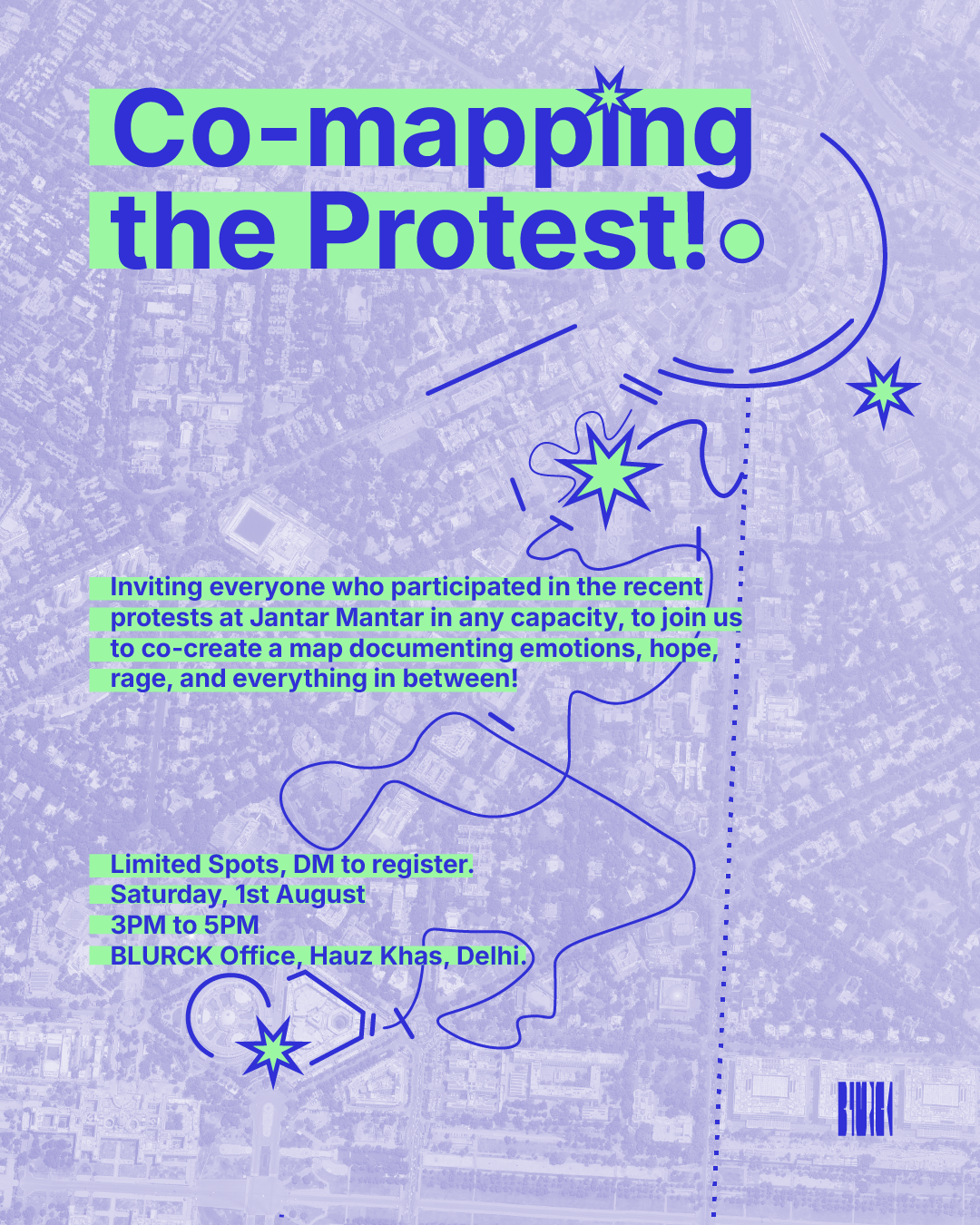
Counter-mapping is a method of documenting time and space in narratives that are often not dominant and are even attempted to be erased. It captures stories of places that never make it to official documentation and hence are rarely available when scholars, planners, and policy-makers engage with geographies. Archiving experience, especially in times of erasure thus becomes an act of activism. It encourages a critical reflection of an event/instance/problem beyond the conventional ways. When done in groups it also elicits an empathy towards the lived experiences of one’s co-mappers and forges a deeper understanding of our collective connections to the spaces we occupy.
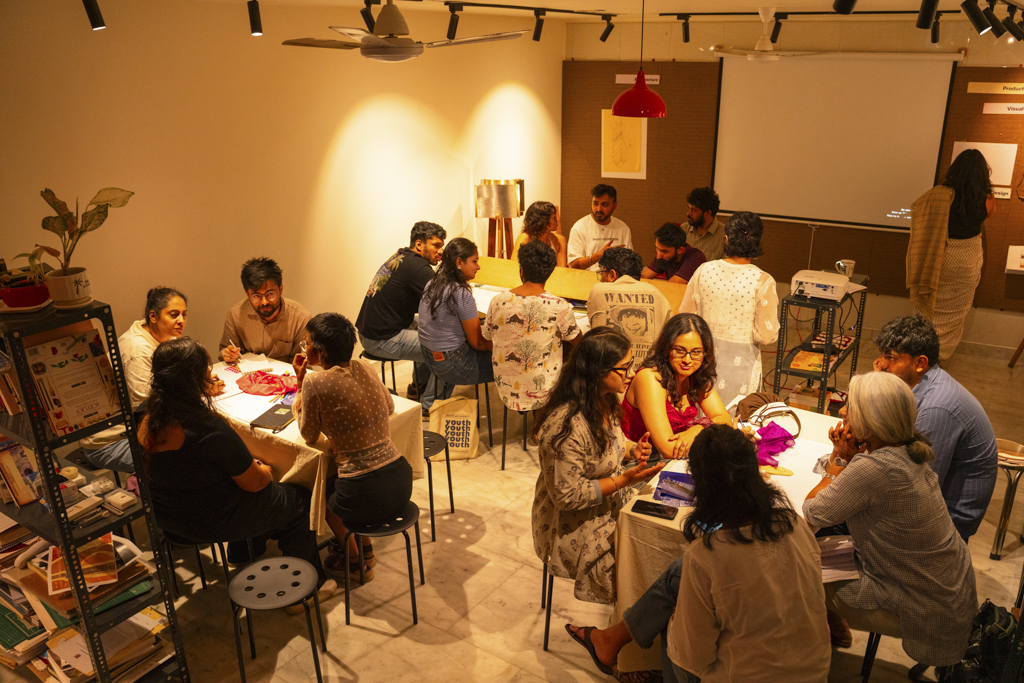
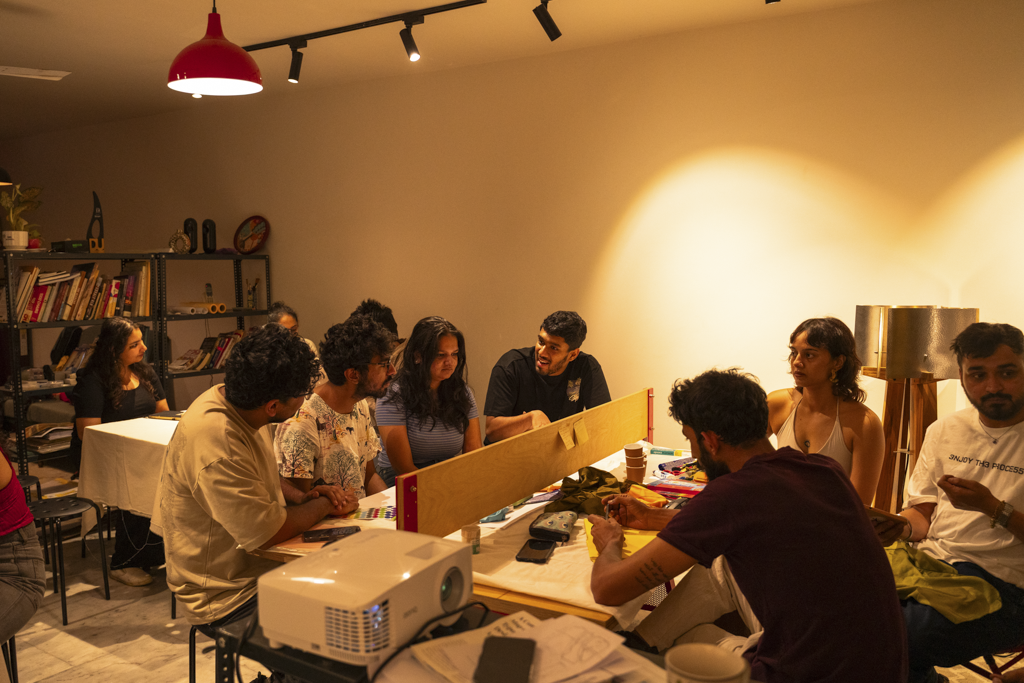
The past weekend was a rather special one at BLURCK’s Delhi office when about 20 people gathered for a co-mapping workshop to document what they experienced at the recent Jantar Mantar protests demanding the resignation of Education Minister Dharmendra Pradhan. Lakhs of people came together at the site, millions had access to the space by virtue of social media. Soon after the protest was called over, the walls of the protest site were wiped and painted over to remove any signs of dissent. Archiving the space as it is fresh in memory becomes crucial.
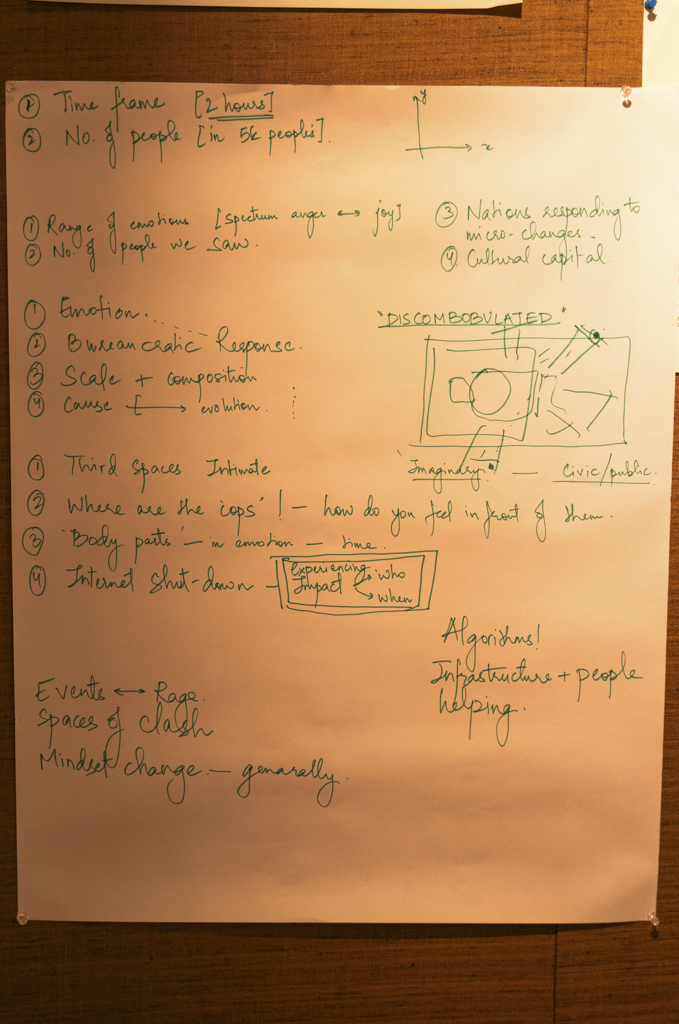
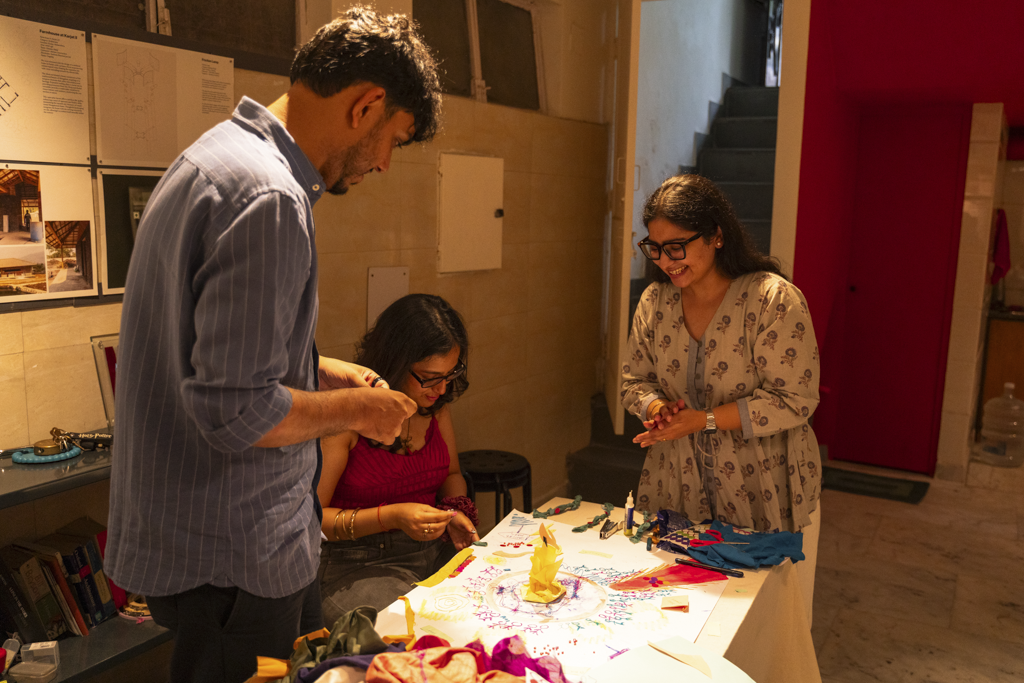
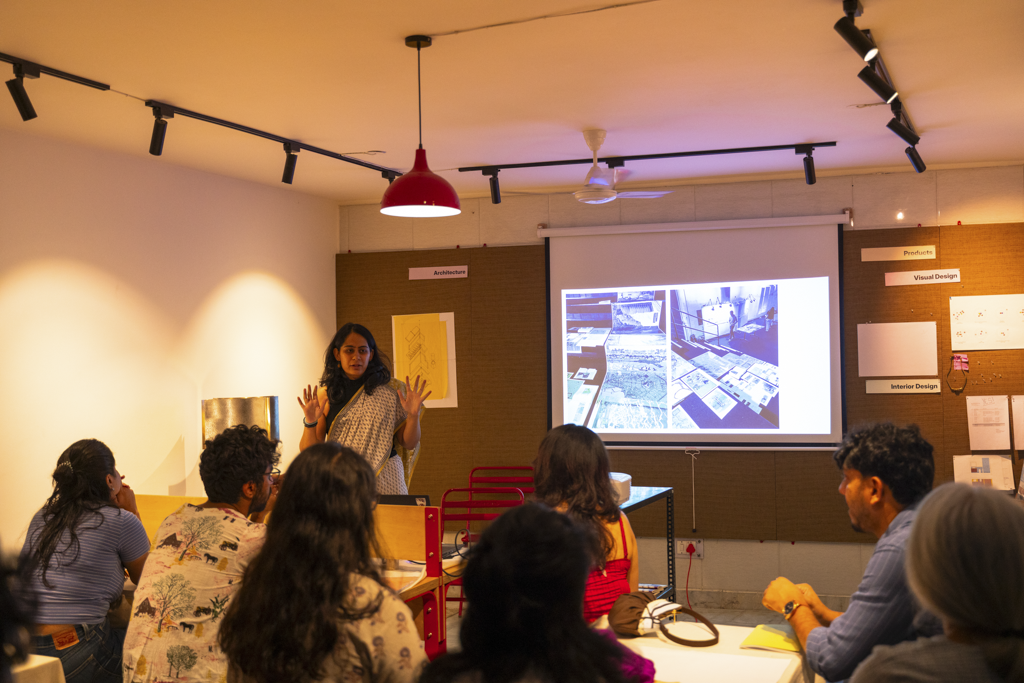
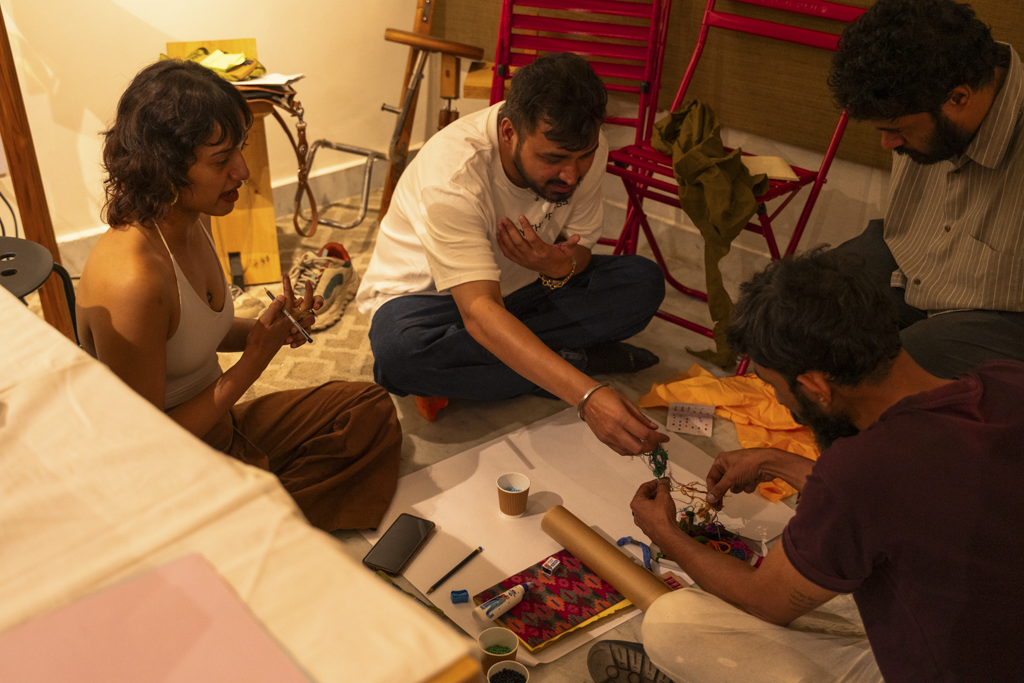
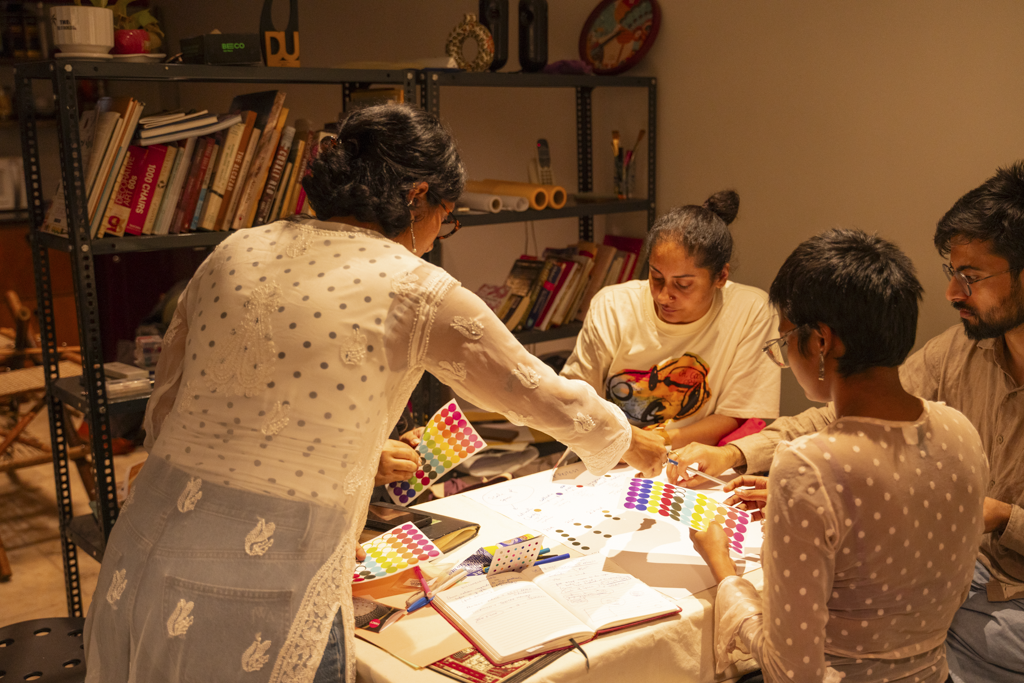
The workshop started with a short introduction to countermapping as a method, followed by a discussion on what could be the potential metrics that could be used to channel our lived experiences onto the maps. We divided oursleves into 4 groups, each one employing a different mapping technique, a distinct artistic expression, and varying degrees of detail. The maps with their concept notes are as follows:
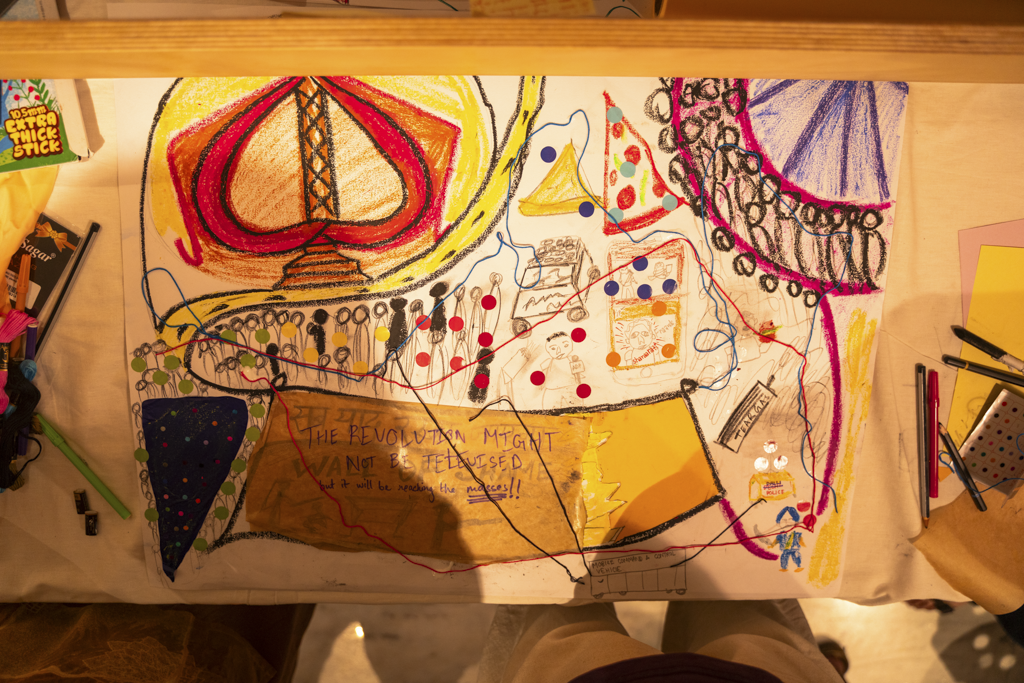
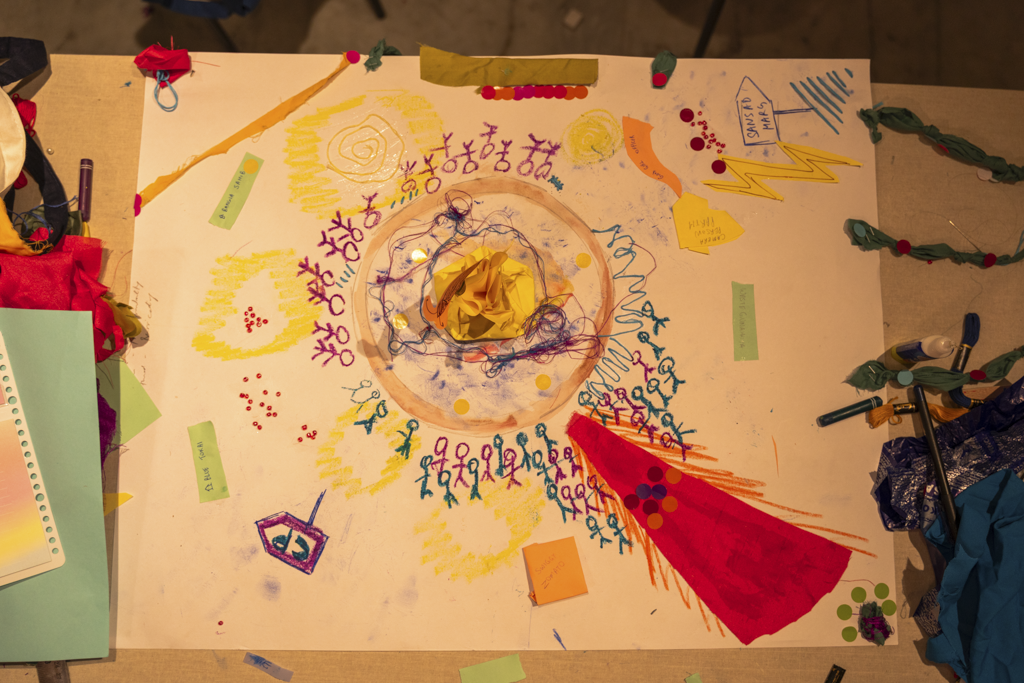
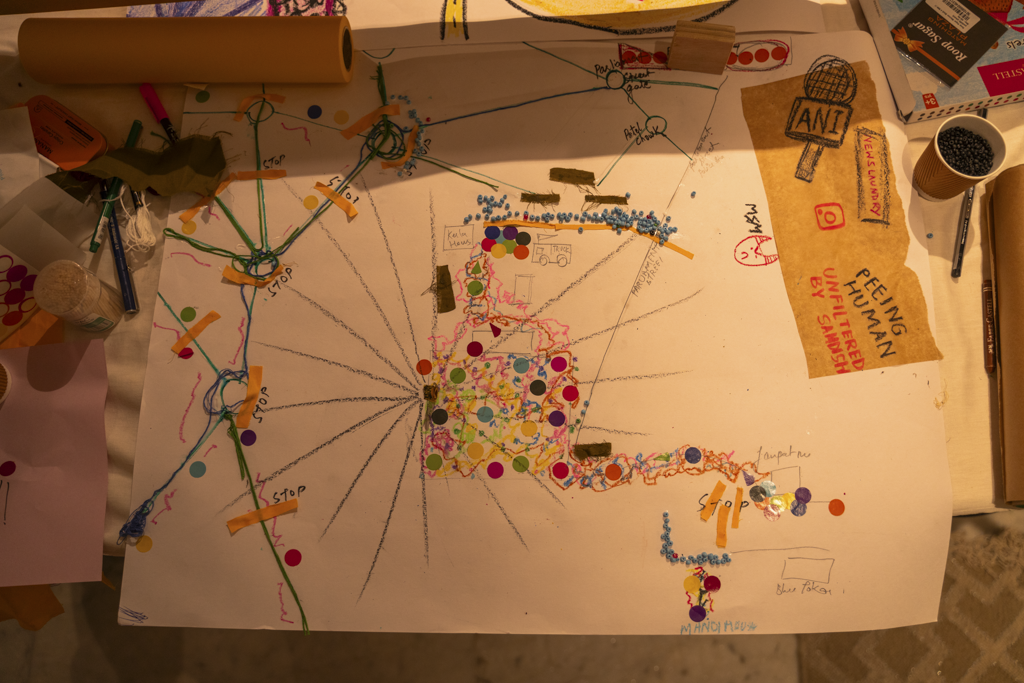
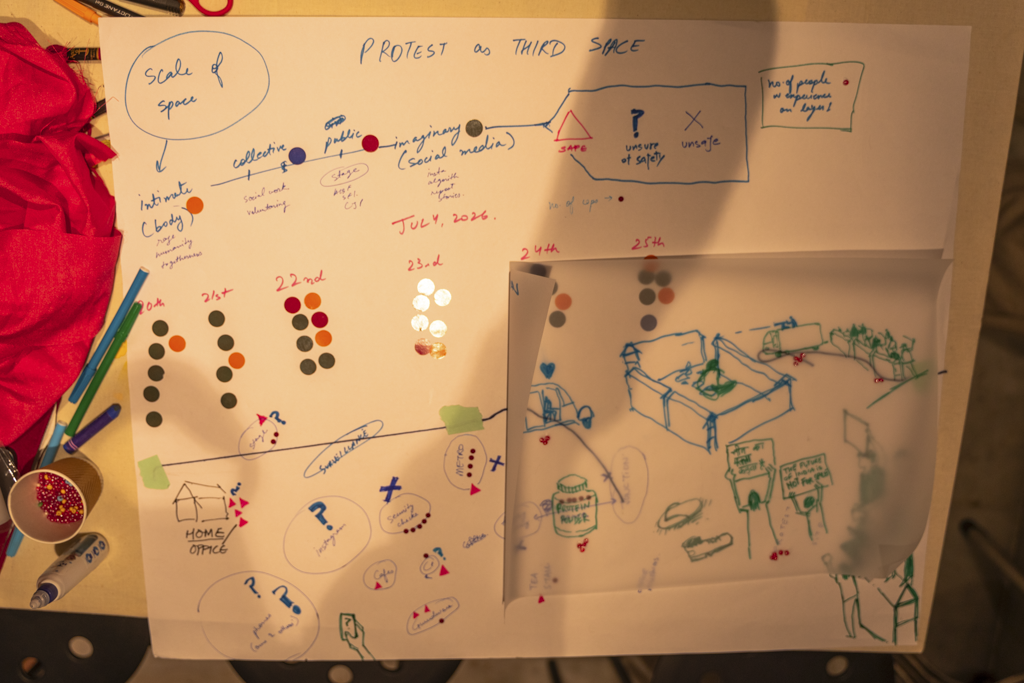
Above everything the workshop felt like a space to gather our thoughts around the protests which in many different ways have shaped the current political climate of the country. In navigating the space to make a map of the site, somewhere all of us ended up navigating through our complex emotions, viewpoints, and responses to the protest.
Photographs by: Sarthak [@serene_shutters]
Workshop facilitated by: Bhavya [BLURCK]
Cartographers: Arnav, Deepesh, Gauri, Kaafir, Kajal, Kamiya, Lakshita, Mansi, Pranay, Prateek, Priyanka, Ritwika, Riya, Sarthak, Shaswatee, Shubhangi, Yash
